
You’re driving home on the Anthony Henday after work. Everything seems normal until the steering starts feeling a little strange. Maybe the vehicle pulls slightly to one side. Maybe you hear that unmistakable flapping sound.
A few seconds later, you know exactly what happened.
Flat tire.
It’s frustrating. It’s inconvenient. And depending on where you are, it can feel a little stressful too.
The good news? There are a few things Edmonton drivers can do before calling for help that can make the situation safer, easier, and potentially less expensive.
At Bruce Stewart Automotive, we handle tire repair in Edmonton every week. Some flats can be repaired quickly. Others require replacement. Knowing what to do in those first few minutes can help protect both you and your vehicle.
First Things First: Get Somewhere Safe
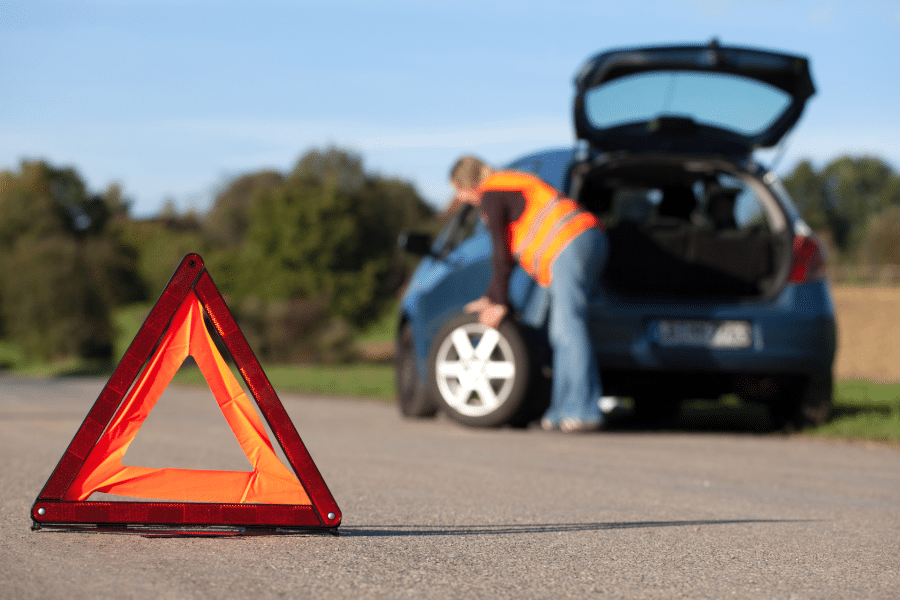
The moment you suspect a flat tire, don’t slam on the brakes.
Instead, slow down gradually and look for a safe place to pull over.
If you’re on a busy road like the Henday, Whitemud, or Yellowhead, try to get as far off the roadway as possible. Turn on your hazard lights so other drivers can see you.
This is especially important during Edmonton winters when visibility can be poor and stopping distances are longer.
Safety comes first. Always.
Take a Quick Look Before Making Any Decisions
Once you’re safely parked, step out carefully and inspect the tire if conditions allow.
Sometimes the problem is obvious.
You may see:
- A nail or screw
- A large puncture
- A damaged sidewall
- A tire that’s completely flat
Other times the cause isn’t immediately visible.
If you notice damage to the sidewall or the tire appears shredded, don’t attempt to drive any further. Those types of damage usually can’t be repaired safely.
Should You Use the Spare Tire?
This depends on your situation.
If you have a spare tire and know how to install it safely, it can be a good short-term solution.
That said, many newer vehicles don’t come with a full-size spare anymore. Some only have a temporary spare, often called a “donut.”
These are designed to get you to a repair facility, not to be driven for days.
If you’re unsure about changing the tire yourself, it’s perfectly okay to call for assistance.
Honestly, many people haven’t changed a tire in years. No judgment there.
Don’t Keep Driving on a Flat Tire
This is probably the biggest mistake we see.
A lot of drivers think they can limp along for “just a few more blocks.”
Usually that doesn’t end well.
Driving on a flat tire often destroys the tire completely. What may have started as a simple puncture repair can quickly become a full tire replacement.
It can also damage the wheel itself.
If the tire loses air, stop driving as soon as it’s safe to do so.
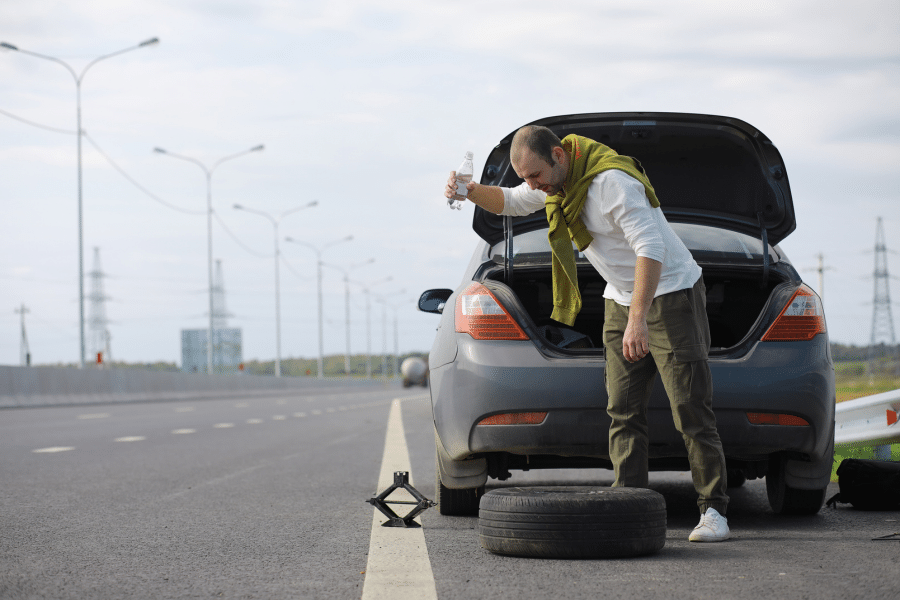
Why Did the Tire Go Flat?
Many people assume a flat tire automatically means they drove over a nail.
Sometimes that’s true.
But there are plenty of other causes too.
Common reasons we see for tire repair in Edmonton include:
- Nails and screws from construction zones
- Pothole damage
- Impact damage from curbs
- Sidewall punctures
- Valve stem leaks
- Bead leaks around the wheel
- Tire aging and cracking
Edmonton roads can be tough on tires, especially after winter. Spring potholes alone keep many tire shops busy for months.
Can Every Flat Tire Be Repaired?
Not always.
This is probably one of the most common questions we get.
A tire can often be repaired if:
- The puncture is located in the tread area
- The damage is relatively small
- The tire hasn’t been driven on while flat
A tire usually cannot be repaired if:
- The sidewall is damaged
- The puncture is too large
- The internal structure has been compromised
- The tire has significant wear already
A proper inspection is the only way to know for sure.
Why Quick Tire Repairs Matter
It can be tempting to put off a repair if the tire is only losing air slowly.
Unfortunately, slow leaks rarely fix themselves.
In fact, driving with low tire pressure can create additional problems.
Low pressure causes:
- Uneven tire wear
- Reduced fuel economy
- Poor handling
- Increased stopping distance
- Higher risk of tire failure
Getting the problem checked early is almost always the smarter option.
Choosing a Tire Shop in Edmonton
Not every tire issue requires a brand-new set of tires.
A reputable tire shop in Edmonton will inspect the damage, explain your options, and help you determine whether repair or replacement is the right solution.
At Bruce Stewart Automotive, we take the time to properly assess the condition of the tire before making recommendations.
Sometimes the fix is simple.
Sometimes it’s not.
Either way, you’ll know exactly what’s going on before any work begins.
What About Tire Pressure Warning Lights?
Many modern vehicles have tire pressure monitoring systems.
If your tire pressure light comes on, don’t ignore it.
The light doesn’t always mean you have a flat tire. Sometimes it’s simply reacting to temperature changes. This happens frequently during Edmonton winters when overnight temperatures drop significantly.
Still, it’s worth checking.
If the light stays on or you notice handling changes, have the tire inspected.
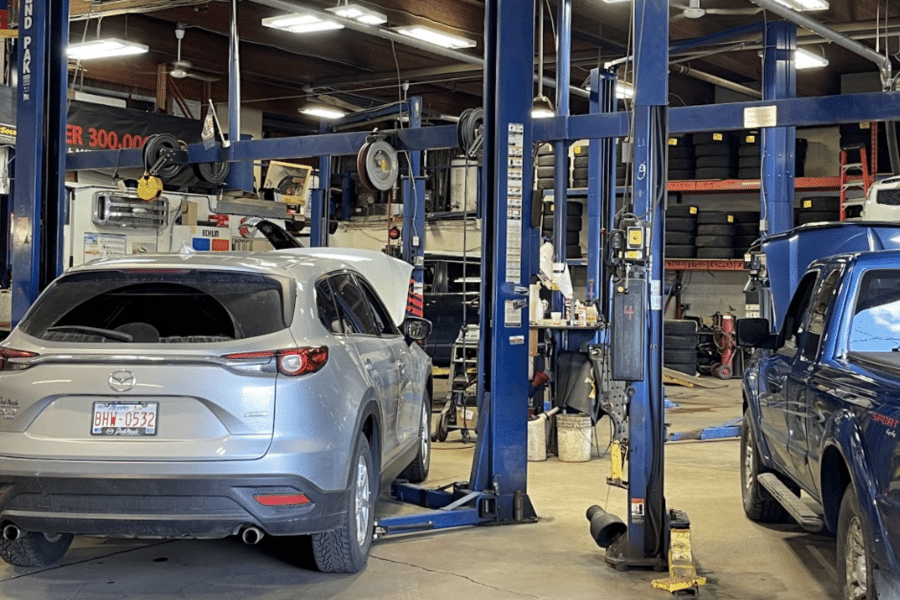
A Little Prevention Goes a Long Way
Nobody can prevent every flat tire.
Road debris happens.
Potholes happen.
Construction zones happen.
But regular tire inspections can help catch small issues before they become bigger problems.
Checking tire pressure, monitoring tread wear, and having your tires inspected during routine maintenance can save a lot of headaches down the road.
Don’t Let a Flat Tire Ruin Your Day
Flat tires are never convenient, but they don’t have to become a major problem.
The most important thing is staying safe, avoiding further damage, and having the tire properly inspected as soon as possible.
If you’ve experienced a flat tire or suspect a slow leak, Bruce Stewart Automotive is here to help with professional tire repair in Edmonton.
Give us a call, stop by the shop, or book an appointment. We’ll help get you back on the road safely.